
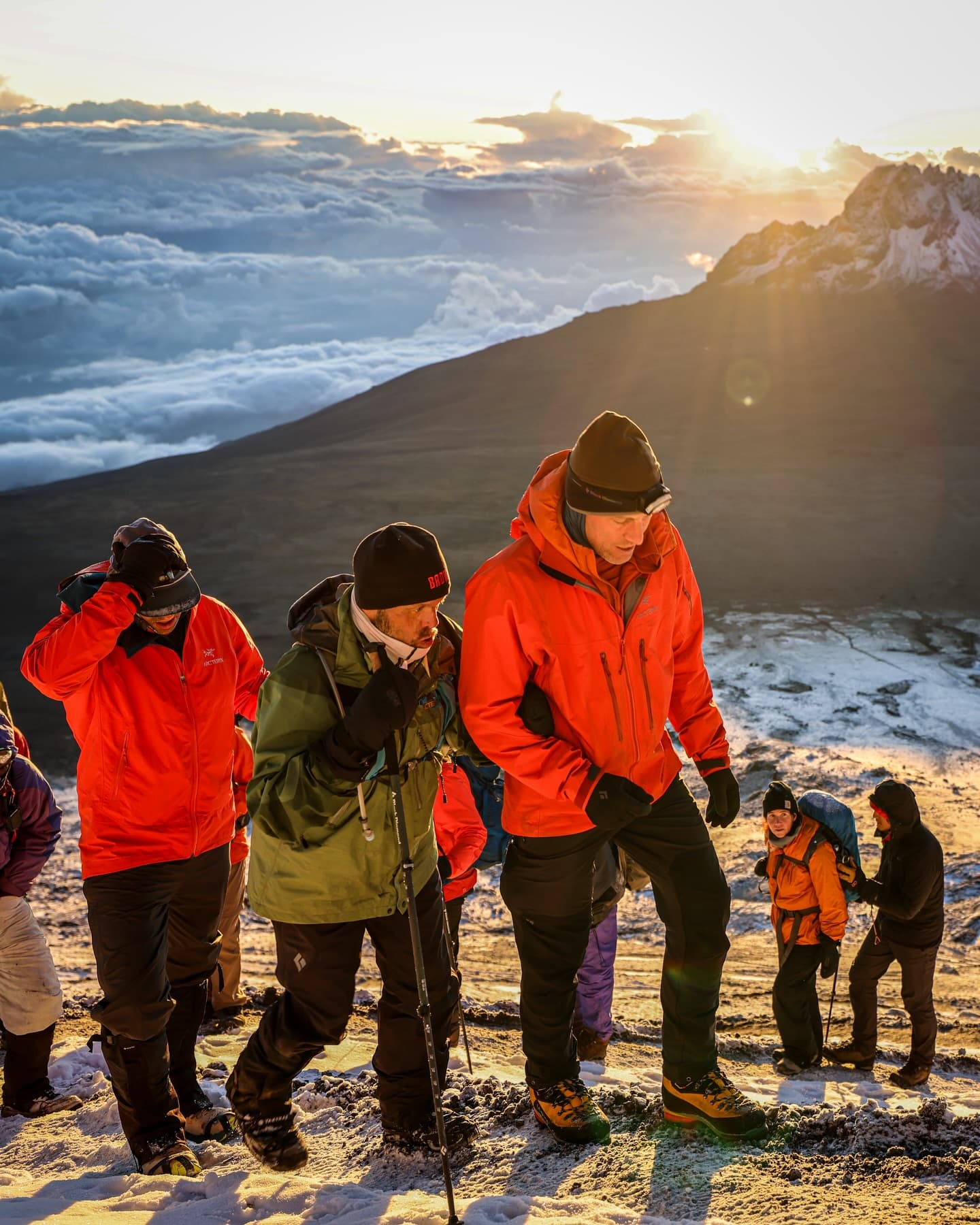
There comes a point in any truly difficult endeavor when your mind begins to negotiate with you.
Negative self-talk starts to sound a lot like reality.
I've experienced it before. At the Badwater 135, it happened on the Father Crowley climb. My muscles were wrecked, my balance was gone, and every switchback felt like it was trying to throw me into traffic.
At least, that's what it felt like inside my head.
That same moment showed up again on Mount Kilimanjaro.
But this time, it came after running more than 200 miles across Africa.
The Coast to Kilimanjaro Expedition
In February 2026, our team began an expedition unlike anything I had attempted before.
We started at the Indian Ocean in Mombasa, Kenya with a goal that sounded almost ridiculous when said out loud:
Run from the coast of Africa to Mount Kilimanjaro, then climb the mountain to the highest point on the continent.
By the time we were finished, we had covered 215 miles on foot.
The journey took us through:
- scorching African heat topping 104°F
- rural villages and dense wildlife preserves
- miles of long straight roads through the bush
- thunderstorms and torrential rain
- mud-soaked mountain trails
- and finally snow and altitude high on Kilimanjaro
And I did it blind and deaf, navigating the terrain with a cochlear implant and the guidance of my team.
Running Through the African Bush
The first stage of the expedition was the run.
For eight days we averaged about a marathon a day, covering 194 miles from the coast toward the mountain.
The terrain was unpredictable.
One day we were running through crowded towns. The next we were moving through remote areas where wildlife outnumbered people.
Elephants crossed the road behind us. Zebras and giraffes appeared in the distance. Rangers escorted us through certain areas because of apex predators.
Add to that:
- blazing heat
- uneven dirt roads
- truck traffic
- and fatigue building day after day
Yet the kindness of the people we encountered along the way kept lifting us up.
Truck drivers stopped to hand us food. Villagers came out of their homes because they had heard about the run. Many had seen the story spreading online.
Humanity has a way of showing up in the middle of the hardest moments.
Reaching the Base of Kilimanjaro
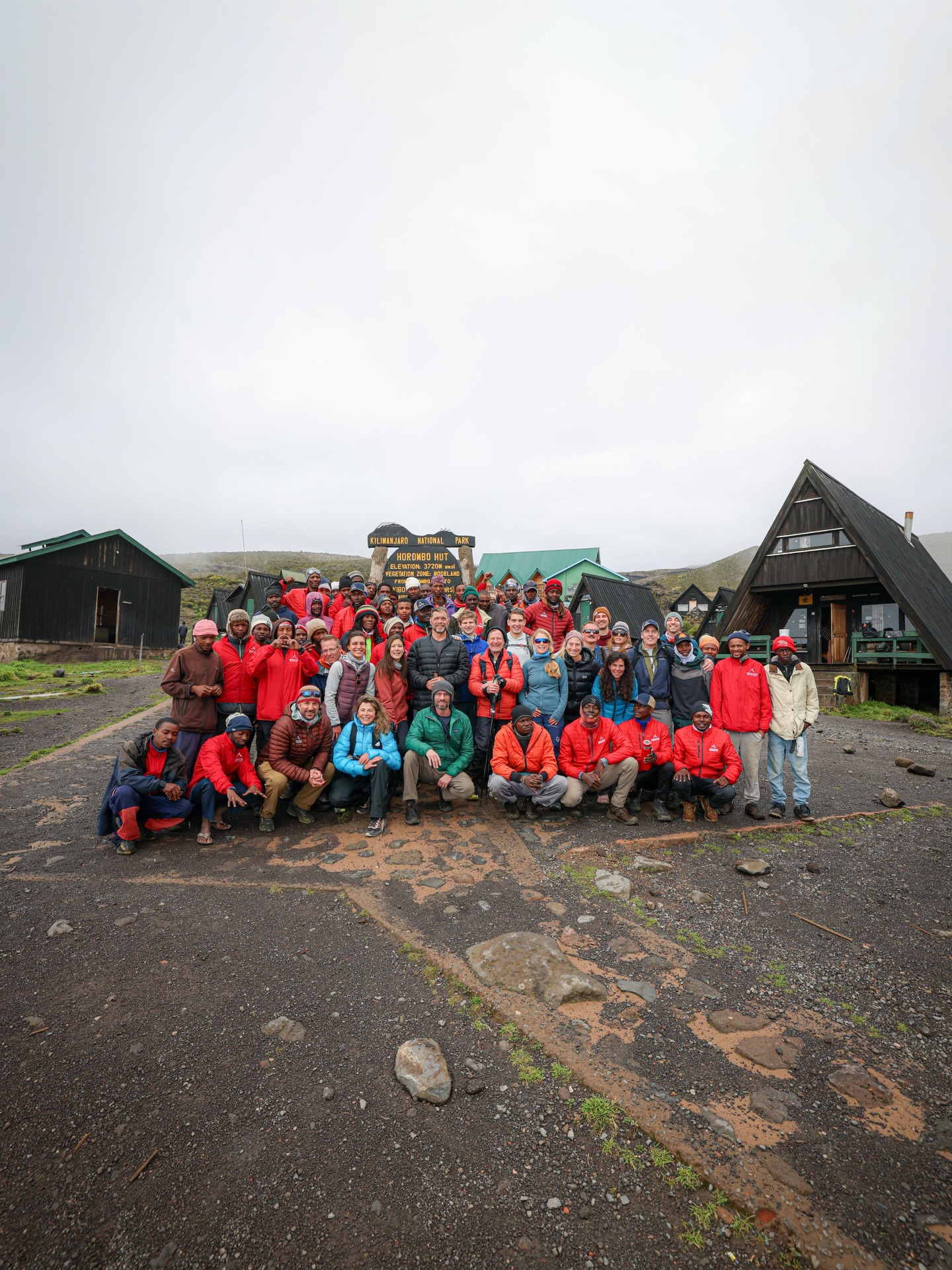
After eight days and nearly two hundred miles, we arrived at the gates of Kilimanjaro National Park.
Right as we finished the first stage of the journey, the skies opened.
It started pouring rain.
But nobody complained.
After the miles we had already put in, standing there soaked felt more like victory than discomfort.
Stage one was complete.
Now came the mountain.
When the Mountain Fights Back
The early part of the climb was supposed to be the "easy" section.
Instead, torrential rain turned the trail into something that felt like a scene from Indiana Jones.
The dirt became thick mud.
Roots, rocks, and brush made every step unstable.
Because of my loss of sight and balance, every step already requires extra effort. But now I would take a step forward only to slide backward in the mud.
Over and over again.
I fell seven or eight times that day.
One of those falls nearly caused an injury when my leg twisted awkwardly over rocks.
Eventually our small group fell behind the rest of the team.
When we finally reached the lunch stop, I was soaked, cold, exhausted, and emotionally spent.
And that voice showed up again.
If this is the easy part, how could I possibly make it to the summit?
Everyone came here to support this mission… and I'm going to let them down.
This was a bad idea.
I sat there quietly with those thoughts running through my head.
My team didn't rush to fix it. They just handed me hot tea and let me eat.
Eventually the calories kicked in, the fog lifted, and I said out loud what I was thinking.
"That was brutal. I can't keep up that kind of effort."
Part of me was almost asking for permission to quit.
Their response?
"You done eating? We've got more mountain to climb."
That's what good teammates do.
They didn't ignore safety concerns. They just recognized the difference between real danger and emotional rationalization.
So we kept moving.
Step by step.
Above the Tree Line
Eventually the terrain began to change.
Once we climbed above the tree line, the trail became clearer and easier to navigate.
It wasn't easy, but it became manageable.
The mountain still had plenty of challenges left:
- altitude
- cold
- long climbing days
- and the mental grind that comes with all of it
But we kept going.
And then came summit day.
The Final Push
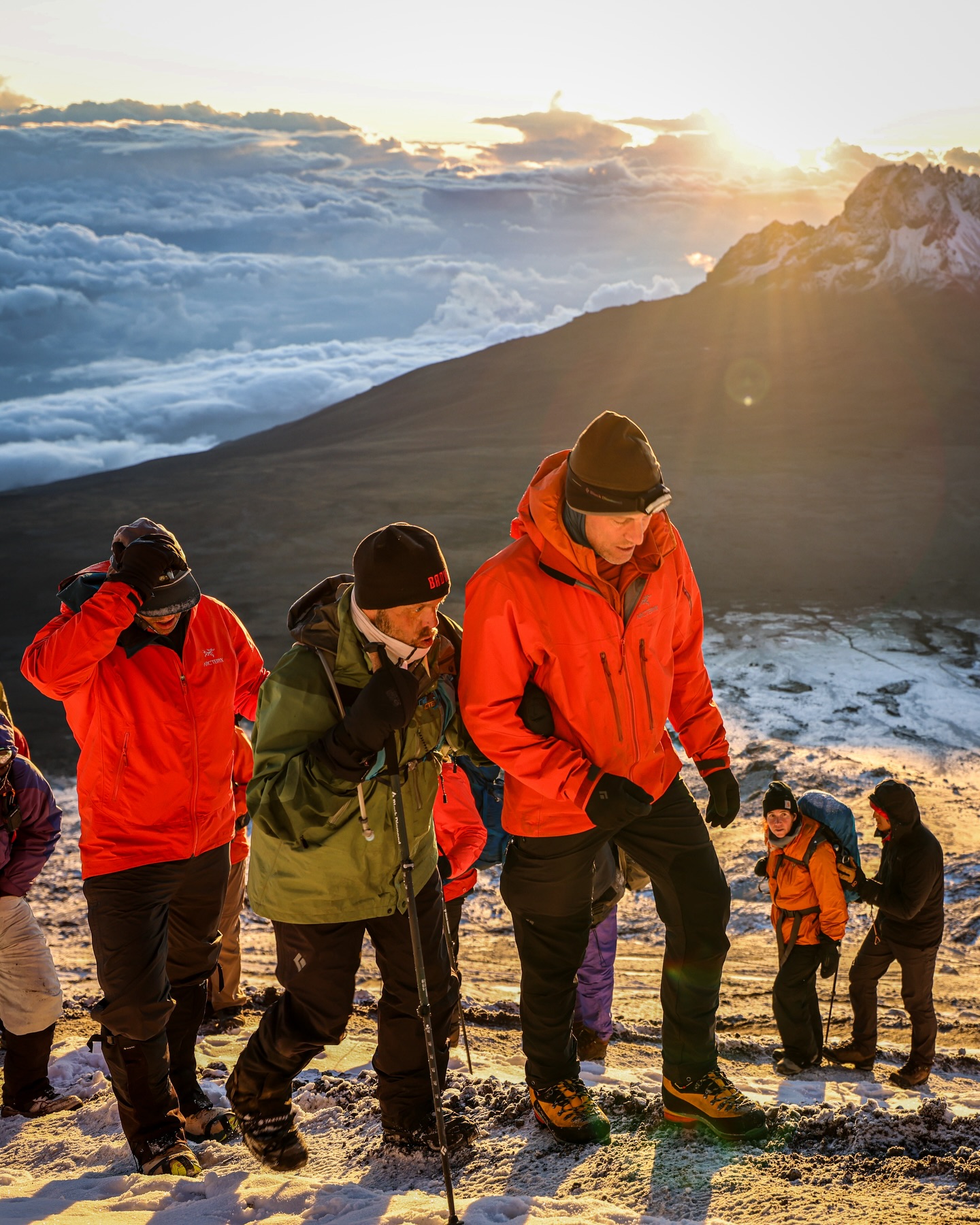
We started our summit push around 2:00 AM from Kibo Hut.
Only three miles remained.
But those three miles required climbing roughly 4,000 feet of elevation in the dark at extreme altitude.
It was the hardest stretch of the entire journey.
Everyone was empty.
But nobody quit.
Standing on the Roof of Africa
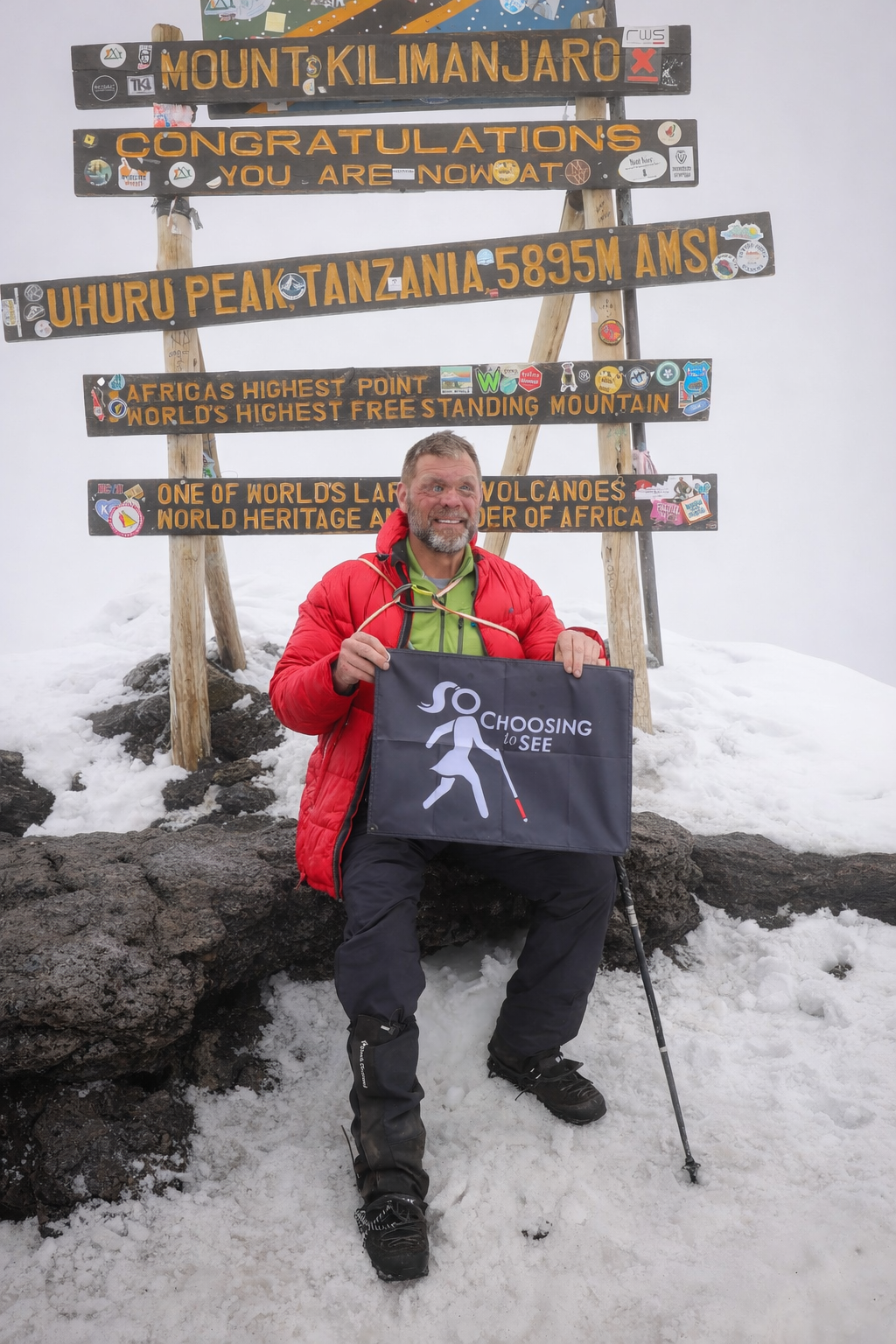
Eventually we stepped onto the summit of Mount Kilimanjaro.
215 miles from the coast.
Standing on the roof of Africa.
You might expect the moment to be defined by exhaustion or relief.
Instead, the overwhelming feeling was gratitude.
Mountains are never climbed alone.
Our guides carefully placed our feet when the terrain demanded it.
Our teammates refused to let each other quit when energy tanks hit zero.
Friends and supporters across the world sent encouragement, prayers, and donations that carried us further than they know.
Organizations like Choosing to See believed in this mission and helped make it possible. Their commitment to opening doors for blind athletes turned an idea into reality.
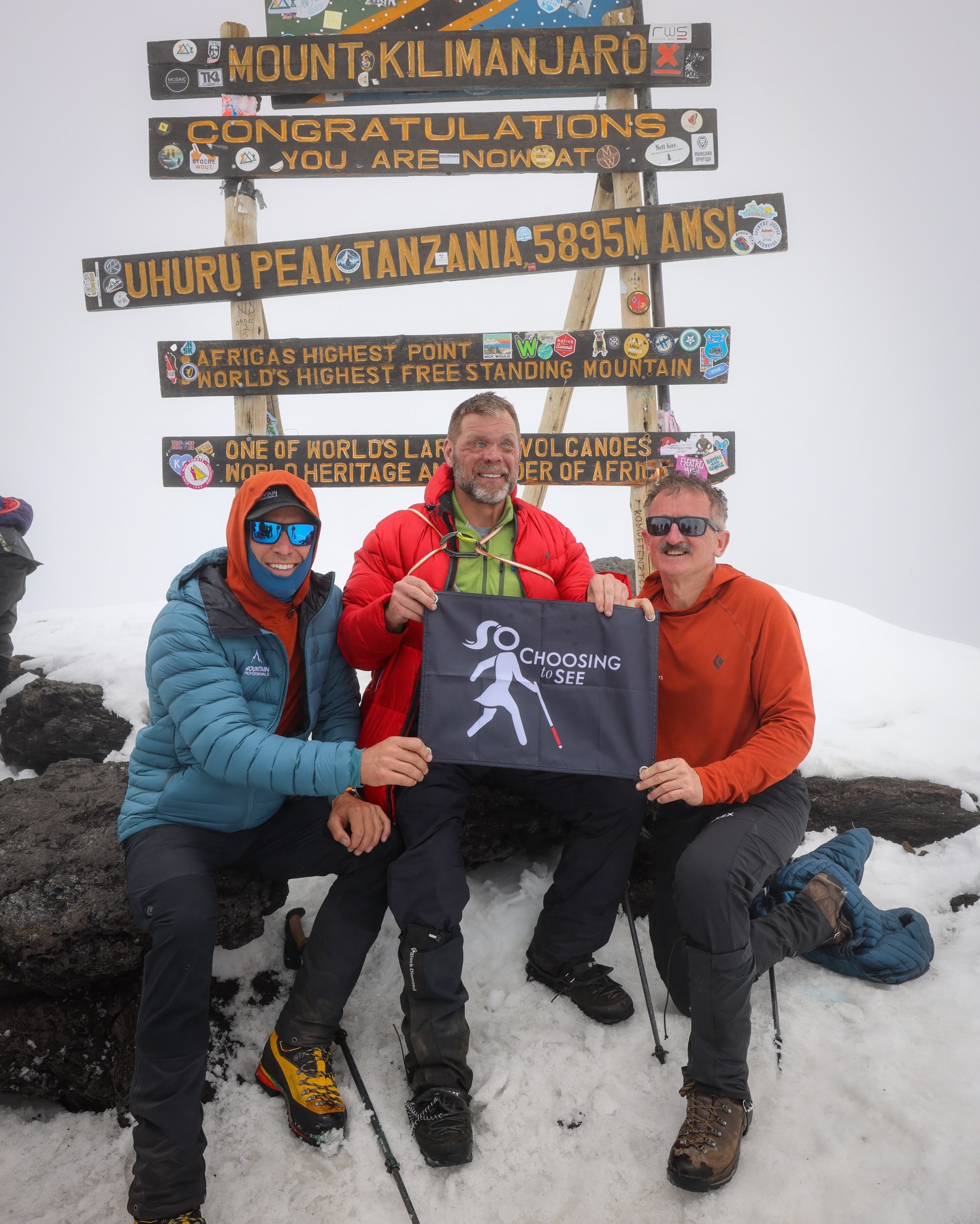
This summit wasn't just ours.
It belonged to everyone who believed.
If this climb meant something to you, and you want to help create more opportunities like this for blind athletes, you can check out Choosing to See and support what they're building. Every bit of it goes toward opening doors that most people assume are closed.
The Real Lesson From the Mountain
The mountain was the destination.
But the real story was the people.
This expedition proved something powerful:
Human potential expands when belief is shared.
Teamwork can carry people through things that would be impossible alone.
And sometimes the biggest obstacle isn't the mountain in front of you.
It's the voice in your head telling you to stop.
Thankfully, I had a team that reminded me to keep moving.
Twende.
Let's go.